
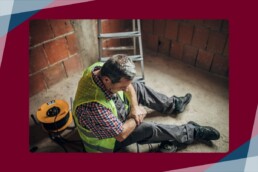
Key Factors that Impact Workers’ Compensation in NJ
What is workers’ compensation in NJ?
Workers’ compensation in New Jersey refers to a ‘no-fault’ insurance package that provides benefits to employees.
These insurance benefits are offered to employees who’ve experienced job-related illnesses or injuries. In the event of a fatal work-related incident, worker’s compensation also covers death benefits.
Why is workers’ compensation important for business owners?
Work-related injuries are incredibly common, and so it’s important for businesses to gain the right protection. The US Bureau Of Labor & Statistics reported that private industry workers incurred 2.8 million injuries or illnesses in 2019.
According to The State Of New Jersey website, New Jersey law requires that all New Jersey employers, not covered by Federal programs, have workers’ compensation coverage or be approved for self-insurance.
Even out-of-state employers may need workers’ compensation coverage if a contract of employment is entered in the state of New Jersey or if work is performed in New Jersey.
Failure to provide workers’ compensation in NJ can result in significant penalties, even if no work-related injuries have occurred.
Why is workers’ compensation important for employees?
Workers’ compensation is important for employees, because it provides much-needed assistance, to support those workers who become injured or sick. Workers’ compensation in NJ provides support such as:
- Financial help for medical treatments and services.
- Disability compensation to pay for wages lost.
- Permanent disability compensation, when illnesses or injuries are long term.
- Death benefits, to support dependents, or to cover burial expenses.
What does workers’ compensation insurance cover?
These insurance policies cover work-related injuries and illnesses. Workers’ compensation benefits come under the following areas:
- Medical Benefits: Including prescriptions, hospital services, or any other necessary medical treatment required. Employers and their insurance providers retain the right to appoint the associated medical providers.
- Temporary Total Benefits: Injured workers who are disabled for over seven days are eligible for these benefits. Temporary Total Benefits are set at 70% of the average wage per week. The benefits are offered until the employee goes back to work, or when the statutory period of 400 weeks has passed.
- Permanent Partial Benefits: If a job-related illness or injury causes a permanent impairment, compensation is set depending on the worker’s functional loss. The benefits are paid each week, beginning after the temporary disability period finishes.
- Permanent Total Benefits: If work illness or injury prevents the employee from returning to gainful employment, that worker may be entitled to this type of benefit. Permanent Total Benefits are initially offered for 450 weeks but can continue beyond this if the worker remains totally disabled.
- Death Benefits: These benefits are provided to dependents of an employee who dies in a work-related incident. Death benefits can also include funeral costs.
How is insurance coverage obtained in NJ?
In the state of New Jersey, workers’ comp insurance coverage can be obtained in the following ways:
- A Workers’ Compensation Insurance Policy drawn up by an authorized insurance provider.
- Workers’ Compensation Insurance can also be accessed through Self Insurance. Applications are handled by The Commissioner of the Department of Banking and Insurance needs. Approval is based on the performance of the company, and its ability to meet legal obligations.
At the Soden Agency in New Jersey, we provide many different types of insurance, from workers’ compensation to general liability. To discuss workers’ compensation insurance in New Jersey, contact us today.
When might workers’ compensation come in handy?
There are various scenarios when workers’ compensation might come in handy, depending on which industry you operate in.
According to research by Safety + Health, ‘Injuries related to material handling account for one-third of total workers’ compensation claims, while strains and sprains are the most common type of work-related injury.’
In an office setting, workers’ compensation is useful if workers have obtained injuries because of ergonomically incorrect workstations.
A recent article in Insurance Business, discusses the recent shift to remote working, asserting that, “employers need to know that the move to remote work has a bearing on their workers’ compensation insurance, and how their employees are classified and covered.”
At the Soden Agency, we can help businesses to understand the finer details of workers’ compensation insurance.
What happens if there is a workers’ compensation dispute?
In the case of a dispute between an employer and an injured worker, the employee can file a claim petition, or apply through the Division of Workers’ Compensation for an informal hearing.
Typical disputes include, whether the injury should be deemed work-related; the extent of medical support; or the payment of benefits.
Which factors affect workers’ compensation premiums?
Worker’s compensation premiums are affected by several factors, including:
- Job classification: Every U.S state has an individual coding system, which classifies jobs according to their injury risk. For instance, warehouse employees face a higher risk than office workers.
- Number of staff: A larger number of employees results in a higher premium.
- Worker wages: Higher salaries result in more expensive worker’s compensation policies.
Do the self-employed need workers’ compensation?
Self-employed people are not legally required to have worker’s compensation insurance.
New Jersey law does not require the coverage for independent contractors, freelancers, or sole proprietors without employees. Having said this, self-employed people can still benefit from coverage, particularly those in high-risk settings.
How can the Soden Agency help?
The Soden Agency has been supporting businesses in New Jersey for many years. Since our company began in 1925, our talented team has continued to expand our services, helping us to better serve the community.
We pride ourselves on offering excellent service, from personal insurance to business insurance. No matter which industry you operate in, we’ll find insurance coverage to suit your specific needs.
At the Soden Agency we also provide coverage for niche industries, from insurance for non-profits, to janitorial businesses.
Injuries on the job or work-related illnesses can be expensive. Failing to obtain the right coverage is a huge financial risk that could negatively impact your success.
At the Soden Agency, we have access to multiple workers’ compensation markets. For workers’ compensation in NJ, our team can help you find the very best coverage.
Related Articles
5 Prevalent Workers’ Compensation Insurance Trends for 2021
The effects of the COVID-19 pandemic severely affected the US economy, and it's currently in recovery mode. Various industries are also feeling the effects and…

Adding A Teenager To Your Auto Insurance Policy in NJ
Are you adding a teenager to your New Jersey auto insurance policy? This is probably an exciting time for your child, but it might be confusing for you. When…